Tuesday, February 8, 2011
Natural Birth Control
Once I started really understanding the impact that chemicals have on our bodies and lives I began looking everywhere for ways to simplify and eliminate unnecessary toxins. One thing I was still doing was popping a daily hormonal birth control pill and it wasn't something I was entirely comfortable with, but where to go from there?
Enter: the Fertility Awareness Method (FAM).
FAM is a form of Natural Family Planning which relies on your body's natural cues to determine fertile periods. This method can be utilized to prevent or achieve pregnancy.
I first started using FAM over 2 years ago for the purpose of trying to conceive. It took 10 cycles for me to get pregnant (I was charting for 7 of them) and during that time FAM gave me insight into my body that I wouldn't have otherwise had. I also knew the exact date of conception, which is good because it can prevent worries or early inductions associated with the faulty conception calculations of a health care provider.
I recently began practicing FAM again, but this time for purposes of avoiding pregnancy.
Prior to trying to conceive our first baby I was on birth control pills. I was on them for quite a long time and I'm convinced that our (relatively short) delay in conception was due to the amount of time it took my body to begin properly regulating itself after cessation of hormonal birth control.
After Jack was born, I went back on birth control pills because I had a newborn and another baby wasn't even slightly on my radar. Because of a number of factors, birth control pills seemed the best option at the time.
Nearly a year later, which brings us up to current day, I'm ready to take back control of my body.
Why?
Well, I'm lucky in that I have never had any overtly negative reactions to hormonal birth control methods unlike a lot of other ladies. However, I don't love the idea of taking a medication which controls a process which my body should be doing on it's own. The effectiveness of hormonal birth control lies in stopping your reproductive system from proper functioning in order to prevent pregnancy. It changes the way your body functions all month in order to block conception in the 12-24 hour window during which a woman is actually fertile.
Not to mention, there are some scary potential side effects associated with hormonal birth control such as headaches, nausea and vomiting, change in sex drive, weight gain, stroke, liver damage, depression, blood clots, heart attack, high blood pressure, high cholesterol, and allergic reaction. It can also mask symptoms of problems such as thyroid disorders or polysystic ovarian syndrome. No thank you, I say!
When practiced properly FAM is just as effective as hormonal birth control in preventing pregnancy. However, "just as effective" is kind of a loaded statement because this method of family planning takes a lot of personal responsibility and dedication and more effort than remembering to take a pill. If FAM fails it's most likely going to be caused by human error, not a problem with the method itself.
How do you practice FAM?
Take your temperature every morning before doing anything else. Every morning I take my temperature orally using a basal body thermometer (BBT). I use a digital version and it looks just like a regular digital fever thermometer, but it's different in that it's ultra sensitive and designed to precisely record your body's resting temperature.
When I was practicing FAM Before Baby I would just take my temp when my alarm went off in the morning before work. Since Jack is often my alarm clock now, my waking time can vary a bit day to day and it's important that you take your temperature at the same time every day so Mark wakes me up when his alarm goes off and tells me that it's time to take my temperature.
Throughout a woman's cycle her basal body temperatures fluctuate depending on the level and type of hormones present at any given time. Your BBT will indicate ovulation as well as impending menstruation.
Chart your temperatures. There are a few ways to do this. There are paper and pencil versions, paid online software, or several free online options. Personally, I like to use FertilityFriend. It is definitely designed for purposes of trying to conceive, but you can still use it to avoid pregnancy if you just ignore all of their pregnancy advice :)
Observe and record cervical fluid. A quick check throughout the day and note it on your chart. Like BBT a woman's cervical fluid changes throughout her cycle and indicates impending ovulation and menstruation.
Some women also like to observe and record changes in cervical position, but I've never done this myself.
So that's my crash course on the FAM. If you're interested in learning more about it I highly recommend reading Toni Weschler's Taking Charge of Your Fertility. I think this should be required reading for every woman regardless of desire to get pregnant or your method of birth control. I really can't recommend it highly enough!
I want women to know that there are options that exist other than hormonal birth control and barrier methods. FAM is not the right choice for everyone, but it is an option worth considering.
Have you ever utilized FAM or any other form of natural family planning to prevent or achieve pregnancy? What was your experience? Or, is FAM something you would like to try?

Monday, February 7, 2011
Menu Plan Monday: Week of February 6th

Sunday: We're having friends over for the Superbowl so I'm making some snacks to nom on throughout the game - Soft Pretzel Bites with a cheese sauce for dunking, Buffalo Chicken Dip, Sliders, and Black Bean and Corn Salsa.
Monday: Lentil Tacos with Leftover Black Bean and Corn Salsa
Tuesday: Roast Pork Sandwiches with Veggie
Wednesday: Crunchy Honey Chicken with Brown Rice
Thursday: Chicken Enchiladas
Friday: Homemade Pizza
Saturday: Monterey Melt Panini with Sweet Potato Fries
I'm linked at OrgJunkie.com
Tuesday, February 1, 2011
Momnesia
 |
| This is your brain Before Baby |
 |
| This is your brain After Baby |
Any questions?
Yesterday I was asked a question that pertained to what I did Before Baby. Yes, not too long ago I possessed useful knowledge that could be applied in a setting where people paid for my opinion. People called me to answer their questions and provide guidance and entrusted important tasks to me. I had knowledge that I learned over time. I spent years adding to that knowledge and knew everything, all the ins-and outs, of my line of work.
Now?
Nothing.
I was asked a few simple questions. Questions that I gave the answer to daily one short year ago and yesterday, I struggled for the answer. I realized that the part of my brain that once housed this useful information is now foggy and disorganized. I was able to recall bits and pieces of information, but certainly nothing near what I used to know.
And that scares me.
In one year's time I have lost knowledge. It has been replaced by things like, what chemicals to look out for in commercial cleaning products or conventionally grown foods, the best price for staple grocery items, and different cloth diapering options. Knowledge that's useful to me and my household, but not necessarily things that other people care about.
If my brain has so quickly forgotten things that I used to deal with everyday, for years, what will happen 2 years from now, or 3?
There's no set time on when I might want to return to the workforce in some capacity, but eventually I may want to. And what if I no longer have the skills to make myself desirable to employers?
What if they're not impressed by a big, gaping hole in the middle of my work experience?
What if going back isn't an option?
What if...
*sigh*
Mom Mush. My brain is Mom Mush.
Monday, January 31, 2011
Menu Plan Monday: Week of January 30th

Sunday: Burritos
Monday: Chili Cheese Potato Bake (using leftover chili from freezer) with Veggie
Tuesday: Ranch House Crock Pot Pork Chops with Parmesan Mashed Potatoes
Wednesday: Cheesy Beef & Pasta with Roasted Acorn Squash
Thursday: Chipotle Cheddar Chicken Panini with Baked Sweet Potato Fries
Friday: BBQ Chicken Pizza
Saturday: Buffalo Ranch Chicken Wraps with Baked Ranch Potato Wedges
I'm linked at OrgJunkie.com
Wednesday, January 26, 2011
Homemade Dishwasher Soap
Ditching commercial cleaning products in your household has obvious environmental and health benefits, but a bonus that I absolutely LOVE is mixing up your own products is so much cheaper than, yet just as effective as, their store bought counterparts! No nasty chemicals AND better for your budget. To me that's a win-win situation!
I've previously shared my green cleaning tips as well as the cloth diaper soap that I like to use (which, by the way, we've been using for 7-8 months now and I still love!) and today I'm going to share a recipe for dishwasher soap that we've recently started using.
This is a quick, cheap recipe to mix up and it works really well! Now, I'm not going to say that it gets everything spotless, but prior to this we were using cheapie store brand detergent and this recipe cleans just as good if not better than that stuff. I can't honestly tell you how it would compare to a name brand product, but I can assure you that it's cheaper than the name brand stuff and it's much better for you and your family!
Homemade Dishwasher Soap
Source: diyNatural
1/2 cup Borax
1/2 cup Washing Soda (if you have trouble finding this Penniless Parenting has a neat tutorial on how to make your own from regular old baking soda!)
1/4 cup Citric Acid (or you can substitute 10 packets of Lemon Kool-Aid)
1/4 cup Kosher Salt
I like to mix this up and keep it in an old 32 oz. yogurt container. You will need just 1 tablespoon-sized scoop of powder per load.
Cost = $0.08 per load!
Let's talk about why homemade soaps are better for you.
According to poison control centers, dishwasher detergents are the #1 cause of accidental poisonings in the household. All you have to do is look at the outside of a bottle to see a warning that says: harmful if ingested. Yet we're washing our dishes and utensils - things that we put our food on and place in our mouths everyday - with these products and surely we're aware that soaps leave a residue behind, but they also release toxic vapors into the air during use.
What harmful chemicals are found in commercial dish detergents?
Sodium Lauryl Sulfate and Sodium Laureth Sulfate (surfactants)
Chlorine
alkyl phenoxy ethanols (APEs)
dichloromethane (DCM)
diethanolamine (DEA)
dioxane
phosphates
Among these are poisons, carcinogens, endocrine disruptors, and compounds that can cause skin, eye, and lung irritation.
And, as I mentioned previously these chemicals are all much harsher on a baby's underdeveloped system than on adults.
If you are interested in avoiding nasty chemicals found in a lot of commercial cleaners, but don't want to go the DIY route there are other options out there that you can purchase at the store, I just don't have any firsthand experience with them!
Monday, January 24, 2011
Menu Plan Monday - Week of January 23rd

Sunday: Dinner at Parent's house
Monday: Chicken Taco Soup (CrockPot)
Tuesday: Mongolian Beef with Brown Rice and Green Beans
Wednesday: Smothered Pork Chops with Veggie
Thursday: Turkey Meatloaf with Mashed Potatoes
Friday: Burritos
Saturday: Meatloaf Sandwiches with Oven-Fried Onion Rings
I'm linked at OrgJunkie.com
Thursday, January 20, 2011
Real Food: Organically Nurtured
I recently had a conversation with a friend regarding Mark's and my decision to feed Jack organic foods and it made me realize how much our way of thinking has changed in the last year.
Anyone who knows me is aware of the fact that I'm very
So, it may come as a suprise that Mark and I have decided to feed Jack organically grown foods.
I know it surprises me.
I'll be honest here, because we're all friends, right? If you had ask me what I thought about organic food a year ago, I would have told you that I thought it was a fad for people who enjoy paying more for things just for the heck of spending more money. Or maybe for dirty, tree-hugging hippies. But, certainly not for me!
And then I began to educate myself about food and I now understand the importance of eating organically.
Over the last several months, I have spent a considerable amount of time researching food. It's actually an amazing topic once you start getting into it and understanding how things are produced and why. There is a TON of information out there that I never knew and would never have known had I not started digging.
My reason for digging?
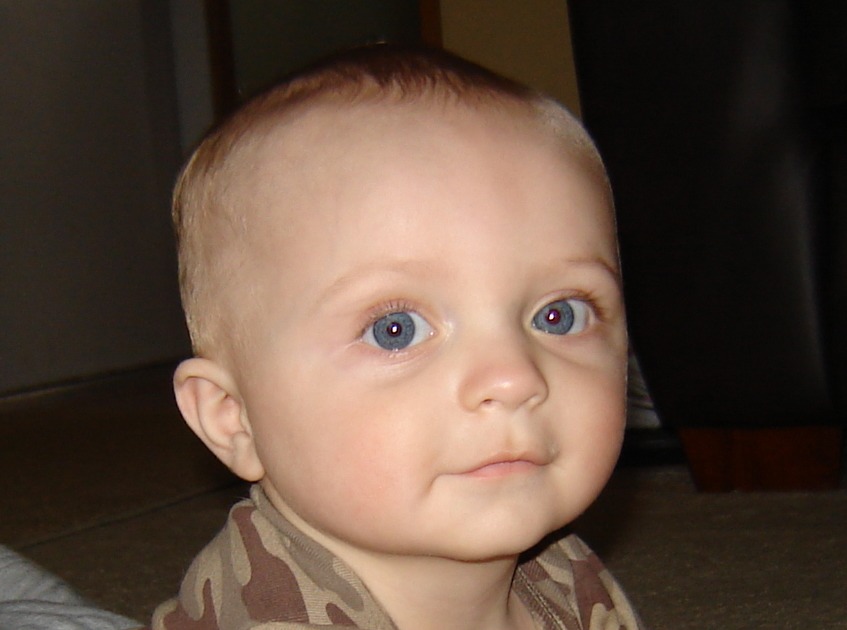
This gorgeous, perfect little boy, whose complete care has been entrusted to me.
Like other parents, I want the best for my child. I don't think that "the best" is any one thing. All families will likely define "the best" differently and it's certainly something you have to decide for yourself based upon your beliefs.
Organic foods are just one of "the best" things that we want to do for Jack.
It's certainly not the cheapest option.
The cost is something that I struggle with. When I'm in the grocery store, it's hard to reach past that conventionally grown apple that's on sale for $0.99 per pound for the organically grown apple that looks EXACTLY the same, but costs $1.99 per pound. Everything that I stand for is screaming at me saying, CHOOSE THE CHEAPER OPTION!
But at this point, my conscience won't allow me to justify skipping organically grown items just because of cost. Because there's more to it. There are good reasons for why the organically grown apple costs more than it's conventionally grown counterpart. And I've found those reasons to be very important.
So, why have we decided that this is "the best" option?
There are certainly many benefits to organic farming, but to sum it up: Pesticides scare me.
Pesticides are utilized in conventional growing techniques in order to produce the most crop for the least cost. Although there are clearly benefits (hello, cheap food!) there are also serious consequences. More is known about pesticides today than when they first came into use. Although we now know more than we used to, I don't think we fully understand the impact of these chemicals on our bodies.
As of now, we know pesticides have been linked to serious health problems such as cancer, lung disease, reproductive problems, endocrine and and immune system disorders, asthma, and both Parkinson's and Alzheimer's disease. Testing has also found that pesticides can cause permenant changes in brain chemistry that may contribute to Autism spectrum disorders, behavorial disorders such as Attention Deficit and Attention Deficit Hyperactivity, as well as other learning disabilities.
The more research that is done on these chemicals, the more we find that they are bad for us.
One just has to take a look around our society today to know that there is a higher incidence of chronic diseases. (I recently read that more than 25% of youths are on long-term prescription medication along with 51% of adults who have medical insurance, which could be a whole separate post.) The truth is that it's often hard to pinpoint the exact cause of many of these problems. I don't think that eliminating the use of pesticides would eradicate all disease, but I'm of the opinion that reducing their use could certainly improve the situation.
Pesticides are scary for anyone to consume in my opinion, but they are especially bad for children. Here are some reasons why:
- Children consume more food relative to their body weight than adults do. This means, that they have to process and eliminate more chemicals from their small, underdeveloped systems.
- Children's bodies and brains are immature and still developing making it easier for their body to absorb pesticides and other chemicals, but harder for them to elimiate from their system.
- Pesticides actually block the absorbtion of vital nutrients that help children's bodies to grow and maintain a healthy immune system.
Even if we don't currently know all the answers, I think it's safe to say that what we as a society are currently doing isn't working. Chronic diseases are on the rise, the health of Americans is declining, and although "they" like to blame it on individual diet and lifestyle choices alone, that can't be the whole story.
I know that as hard as I try, I can't keep Jack's little body from being exposed to all nasty chemicals, toxins, and pesticides. There are just too many of them out there. And I know it's not the end of the world if he eats some birthday cake, or a snack at a friend's house that's not necessarily something I would feed him at home, but I want to do the best that I can with the parts of his life that I do have control over.
I want to make sure that as much as possible of the food that he consumes every day is as healthly and safe as it can be.
The foods that are fed to a baby or a small child are vital to their growth and development. It's the fuel that allows their systems to mature, their bones to grow, and their brain to achieve higher function. That's a tall order from some humble green beans or squash and this is why I want to make sure that the fuel I'm introducing to my child's body is the best that I can provide.
Interested in the Real Food Movement?
Here's some recommended reading:
Nina Planck's Real Food: What to Eat and Why and Real Food for Mother and Baby
Michael Pollan's In Defense of Food: An Eater's Manifesto and The Omnivore's Dilemma: A Natural History of Four Meals
Jonathan Safran Foer's Eating Animals
Barbara Kingsoliver's Animal, Vegetable, Miracle: A Year of Food Life
And watching:
Food, Inc.
Foodmatters
The Future of Food
Subscribe to:
Posts (Atom)